| The Variable Ocean II: Sea-Level Rise and the Potential for Increased Seismicity: A Geophysical Hypothesis |
|---|
| | |
|---|
Theoretical mechanism for changes in Sea Levels affecting Earthquakes |
|---|
|
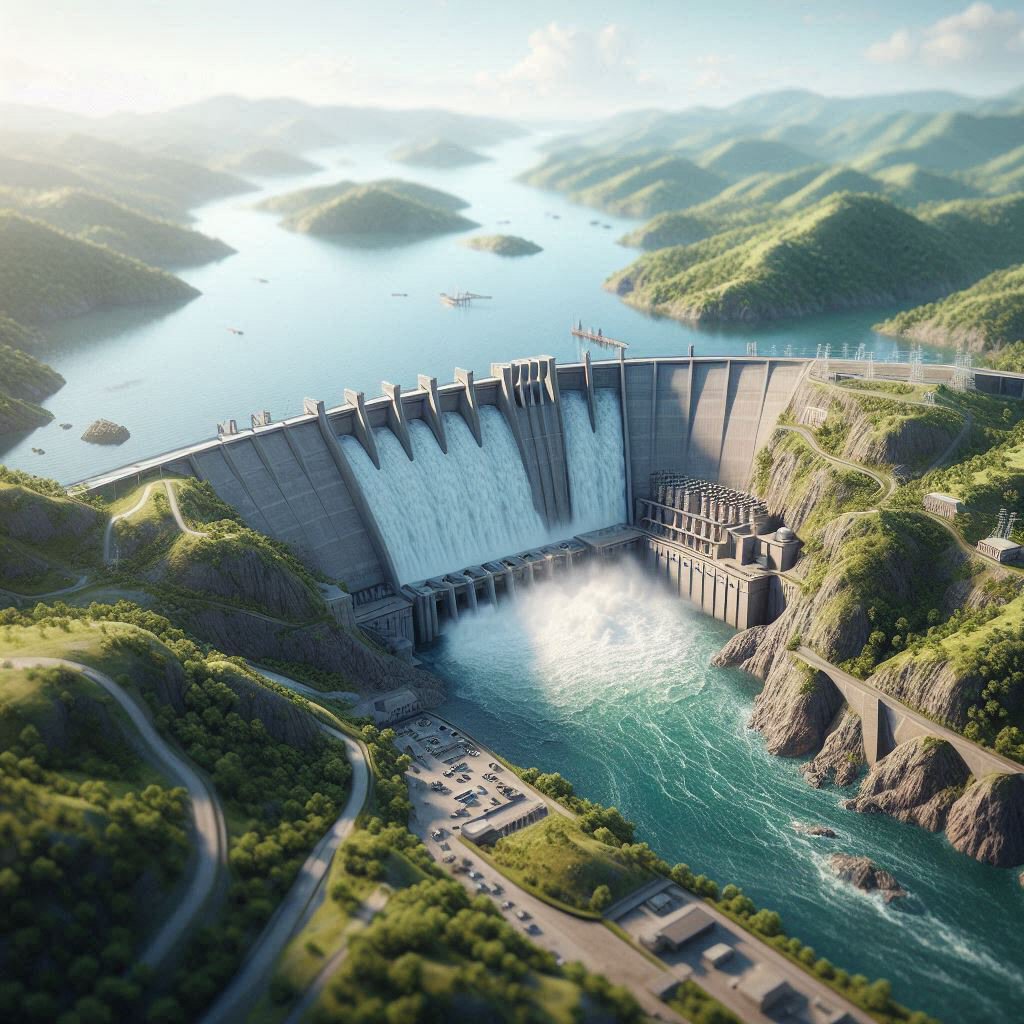
Evidence from the Three Gorges dam ▲ |
|---|
|
The Three Gorges Dam on the Yangtze River — the world's largest hydroelectric power station — has been associated with a measurable increase in seismicity in the surrounding region since its construction and filling began in the early 2000s. Here is a breakdown of what is happening and why.
|
| |
|---|
1. Mechanism: Reservoir-Induced Seismicity (RIS) ▲ |
|---|
|
The phenomenon is known as Reservoir-Induced Seismicity, which occurs when a large reservoir alters the stress state in the Earth's crust. This happens due to two main processes.
Increased Pressure from Water Weight: The massive weight of the water in the reservoir (the Three Gorges holds more than 39 billion cubic metres) adds stress to faults and fractures in the crust.
Water Infiltration: Water seeps into faults and rock pores deep underground, increasing pore pressure. This reduces the friction that normally keeps faults locked, making it easier for them to slip and cause earthquakes.
|
| |
|---|
2. Evidence Around the Three Gorges Region ▲ |
|---|
|
Increased Seismic Activity: After the dam began impounding water in 2003, local seismic monitoring networks recorded a noticeable uptick in small to moderate earthquakes in the region, particularly around Zigui, Badong, and Xingshan counties.
Depth and Type of Quakes: Most of these quakes are shallow (less than 10 km deep) and low in magnitude (below M4.0), consistent with typical reservoir-induced events.
Temporal Correlation: Peaks in seismic activity have often coincided with major changes in reservoir water level — when levels rise or fall rapidly, stresses adjust abruptly, sometimes triggering fault slip.
|
| |
|---|
3. Geological Context ▲ |
|---|
|
The Three Gorges area sits on a tectonically active region, close to the eastern margin of the Sichuan Basin, where there are many pre-existing faults. The Badong Fault and related fracture systems were already under natural tectonic stress; the dam's impoundment may have acted as a catalyst for releasing some of that accumulated stress.
|
| |
|---|
4. Notable Seismic Events ▲ |
|---|
|
Since 2003, hundreds of micro-earthquakes (below magnitude 3) and a few moderate ones (up to magnitude 4.6) have been recorded near the reservoir. None so far have caused significant structural damage, but the clustering and correlation with water levels strongly suggest a causal relationship to the dam.
|
| |
|---|
5. Broader Implications ▲ |
|---|
|
RIS is not unique to the Three Gorges — similar effects have been observed at other large dams, such as Koyna Dam in India and Lake Mead in the USA. While most RIS events are minor, they highlight how large-scale changes in surface water loading can influence geophysical processes. Continuous monitoring and careful management of water level fluctuations are essential to minimise risk.
The Three Gorges reservoir is deliberately cycled annually by approximately 30 metres for flood control purposes — filled to 175 metres above sea level each autumn and drawn down to 145 metres by late spring. The seismicity record tracks this cycle measurably, with earthquake frequency rising during both rapid filling and rapid drawdown phases, consistent with the Lake Mead finding that it is the speed of the transition, in either direction, that stresses the fault system. This cyclic response has a further implication: it demonstrates that the crust does not wait passively for a single loading threshold to be crossed, but responds incrementally to each oscillation. Applied to sea levels, this means that storm surges, seasonal variation, and ENSO-driven fluctuations superimposed on the long-term rise may each contribute incrementally to fault stress accumulation — making the total seismic effect of rising seas greater than a simple comparison of absolute water levels would suggest.
|
| |
|---|
Koyna Dam, India (Maharashtra) ▲ |
|---|
|
The world's most clear-cut and scientifically confirmed example of reservoir-induced seismicity.
Background: Dam completed 1962. Reservoir capacity approximately 2.8 billion cubic metres. Location: Western Ghats, Maharashtra, along a pre-existing fault zone.
Observed Seismicity: Before impoundment, the Koyna region was seismically quiet. After water filling began in 1962, seismic activity increased dramatically. Thousands of small earthquakes were recorded annually. The largest, on 10 December 1967, reached magnitude 6.3 — the largest and most destructive RIS event ever recorded. It caused over 180 deaths and extensive damage to nearby structures.
Temporal correlation: Seismicity spiked soon after reservoir filling and fluctuated with seasonal water-level changes.
Spatial correlation: Epicentres clustered around the western edge of the reservoir, near major faults.
Pore pressure mechanism: Studies show that infiltration of reservoir water increased pore pressure at depths of 5–10 km, triggering slip along pre-existing faults.
Ongoing activity: Even decades later, microearthquakes continue to occur seasonally in response to water level changes.
|
| |
|---|
Lake Mead, USA (Nevada–Arizona border) ▲ |
|---|
|
One of the earliest and best-studied examples of RIS in North America.
Background: Hoover Dam completed 1935. Reservoir capacity approximately 35 billion cubic metres, comparable to the Three Gorges. Geology: lies near several fault systems in the Basin and Range Province, an area under regional extensional stress.
Observed Seismicity: Before the dam, the area was seismically quiet. Following reservoir impoundment, a sharp increase in small earthquakes (magnitude 2–5) was recorded in the late 1930s and 1940s. Clusters of earthquakes corresponded to rapid rises and drops in lake level. Later studies found that pore pressure diffusion into the fractured crust likely triggered these events.
The Rate-of-Change Finding: The Lake Mead data contains a critical detail that goes beyond the simple fact of reservoir loading. USGS analyses established that earthquake frequency did not simply correlate with the highest absolute water levels. It spiked during periods of fastest change in water level — both rising and falling. Once the lake level stabilised and remained flat for a period, seismic activity subsided as the crust gradually adjusted to the new baseline. The system was responding not to the weight, but to the rate at which the weight was changing.
This distinction is fundamental. It means that a fault system near a reservoir filled slowly over decades may remain relatively stable, while the same fault system subjected to a rapid change of the same magnitude may rupture. The trigger is the speed of loading, not the load itself.
|
| |
|---|
Scientific Consensus on R.I.S. ▲ |
|---|
|
Koyna remains the textbook case of human-triggered seismicity by a reservoir. Lake Mead provided early evidence and helped establish the concept of Reservoir-Induced Seismicity in the 20th century. Three Gorges exhibits the same signatures — though with smaller magnitudes so far — confirming that large reservoirs can and do alter the local stress field in the crust.
There is also a paper published in January 2026 in the Journal of Coastal Research that provides geological evidence for a rapid sea-level rise of approximately 4 metres within a 70-year period during the 5th century AD, with implications for the rate of change of sea levels that RIS mechanics would predict to be seismically significant. See Higgs (2026).
|
| |
|---|
The Critical Variable: Rate of Change ▲ |
|---|
|
The engineering evidence from Lake Mead, Koyna, and Three Gorges collectively establishes that the key trigger in reservoir-induced seismicity is not the absolute level of water but the speed at which it changes. This finding has a direct and serious application when we consider what is happening to global sea levels under accelerated climate warming.
The hydraulic shock effect
Think of the thin oceanic crust as a large flat stone resting on a saturated sponge. If you place a heavy weight onto the stone slowly over an hour, the water inside the sponge squeezes out gradually through the sides, and the system remains stable throughout. If you drop that same weight onto the stone in a single instant, the water cannot escape fast enough. The fluid pressure spikes violently, blowing out the structure from within.
When sea levels rise at an accelerated rate, the hydrostatic pressure at the seabed rises faster than the fluid pathways of the rock can accommodate. The pressure spike forces seawater into fractures in the 7-kilometre-thin ocean floor before the system has time to equalise. The crust experiences what is effectively a hydraulic shock.
What the Lake Mead data tells us about Cascadia
The Cascadia subduction zone off the Pacific Northwest of North America operates on a historical rupture cycle of 300 to 500 years. The fault last broke on 26 January 1700 — a date known with unusual precision from Japanese tsunami records. It has now been locked and reloading for 325 years, placing it within or beyond the lower bound of its natural cycle.
The 1700 rupture occurred near the end of the Little Ice Age cooling descent. Based on the Cumulative Thermal Lag Model applied to the averaged Loehle & McCulloch 2008 and PAGES 2k temperature proxy datasets (see The Variable Ocean), sea levels had been falling at an estimated rate of approximately 0.5 metres per century for the preceding 500 years. This slow, progressive unloading of the oceanic crust — a rate the lithosphere could partially accommodate through gradual adjustment — was nonetheless sufficient, once the accumulated elastic strain reached breaking point, to trigger the rupture.
We are now reversing that process, but at a substantially higher rate. Current projections consistent with mainstream IPCC assessments suggest sea-level rise of approximately 1 metre per century — double the rate of the Little Ice Age descent that preceded the 1700 Cascadia event. This relationship can be stated formally:
Tectonic Stress∝ΔTimeΔPressure
Because the time variable is shrinking as the rate of change accelerates, the induced stress rate is increasing. The thin oceanic plate is being flexed downward, and lubricating fluid is being forced into the Cascadia fault plane at a speed the lithosphere did not experience in the 500 years before the last rupture.
The historical comparison is stark. The 0.5 metres per century descent from 1200 to 1700 was slow enough for some degree of crustal adjustment — yet it still ultimately contributed to the largest megathrust rupture in North American recorded history. The current loading phase is running at twice that rate, applied to a fault that has already spent 325 years reaccumulating elastic strain. The Lake Mead rule — that it is rate of change, not absolute level, that triggers the fault — suggests this is precisely the configuration most likely to advance the rupture timeline ahead of its natural geological schedule.
|
| |
|---|
My Conclusion ▲ |
|---|
|
Sea-Level Rise and the Potential for Increased Seismicity: A Geophysical Hypothesis
Summary
The established mechanism of Reservoir-Induced Seismicity demonstrates that rapid changes in surface water loading can directly influence crustal stress. The Lake Mead data adds a further refinement that is critical to understanding modern risk: it is the rate of change, not the absolute magnitude, that determines whether a stressed fault system is pushed to rupture. This provides the theoretical foundation for the hypothesis that the current accelerating rate of global sea-level rise could elevate seismic hazard at already-critical subduction zones beyond what standard risk assessments currently incorporate.
Evidence and Mechanism
Future risk is conditional on the scale and rate of change. While 21st-century projections of 0.3 to 1.0 metres by 2100 may appear modest in absolute terms, the rate implied — approximately 1 metre per century and potentially accelerating — is historically significant. This is double the estimated rate of the sea-level descent that preceded the January 1700 Cascadia megathrust rupture, derived from the Cumulative Thermal Lag Model. That slower rate of unloading, at approximately 0.5 metres per century over 500 years, was still sufficient to contribute to the largest subduction zone earthquake in the recent geological record of the Pacific Northwest.
The geological and archaeological precedent — including evidence for a ~4-metre rise in approximately 70 years during the 5th century AD — confirms that rapid, nonlinear pulses of far greater magnitude are geophysically possible, even if their global synchronicity is debated. If such a pulse were to occur, the differential loading on tectonic plates and the hydraulic shock effect on subduction fault planes would represent a threat of a different order entirely.
Conclusion
It is therefore concluded that:
The physical mechanism of RIS is directly applicable to the concept of sea-level rise-induced seismicity.
Rate of change is the primary trigger variable, as demonstrated empirically at Lake Mead and confirmed at Koyna and Three Gorges. The current projected rate of approximately 1 metre per century is double the rate associated with the conditions preceding the last Cascadia rupture.
The scale of loading is also conditional; a 3–5 metre rise over coming centuries is a plausible projection under high-emission scenarios, while geological precedent confirms that faster, pulse-like rises are possible.
This constitutes a credible geophysical hypothesis for the modulation of seismic hazard over extended timescales. It represents a critical frontier for interdisciplinary climate and solid-Earth research, and one that current standard seismic risk assessments do not yet address.
For a fuller treatment of the physical mechanics — including the 5:1 crustal thickness leverage ratio, the pore-fluid lubrication trigger, and the detailed Cascadia rate analysis — see the companion paper: Hydro-Isostatic Loading and Crustal Seismicity.
|
| |
|---|
Links to other Variable Ocean Documents ▲ |
|---|
|
The pages below show links to documents that reference pages concerning The Variable Ocean.
These pages discuss the apparent historical Sea Level changes that have been found across the UK, their implications and the creation of a theory of Sea Level changes that incorporates these observations, this in turn has developed into a geological framework that explains earthquakes, subduction zones and supervolcanoes.
For the individual pages please click on the links, new documents will be auto populated as and when these
are written.
| |
Awaiting article for Variable_Ocean_Menu
|
|
|
;)